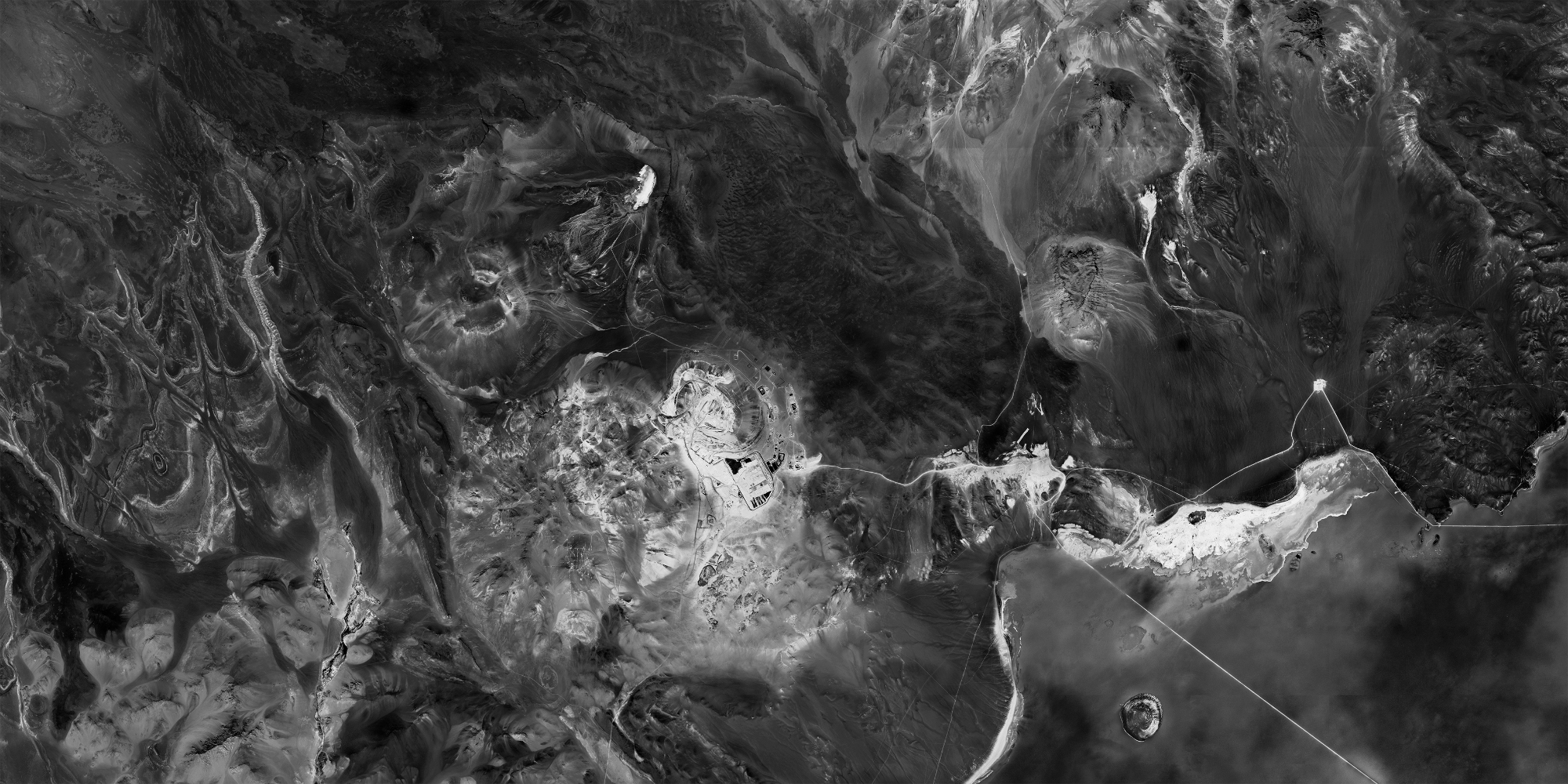
Argentina. Salta. Salar de Arizaro y Proyecto Lindero. 25°06’00.0″S 67°45’00.0″O. 2024.

Bolivia, Salar de Uyuni, 20°32’54.95”S 67°22’36.33”O, 30 Abr 2019. 2021.

Argentina, Salar de los pastos grandes. 24°34’17.32″S 66°42’08.43″O. 16 julio 2009. 2021.

Argentina, Salar de Olaroz 1. 23°38’49.85″S 66°44’48.41″O .14 nov 2020. 2021.

Argentina, Salar de Olaroz 2. 23°38’49.85″S 66°44’48.41″O .14 nov 2020. 2021.

Chile, Salar de Atacama, 23°32’54.24″S 68°23’29.03″O, 7 Feb 2017. 2021.

Chile, Salar de Atacama, 23°32’54.24″S 68°23’29.03″O, 7 Feb 2017. 2021.

Chile, Salar de Atacama 3, 23°32’54.24″S 68°23’29.03″O, 7 Feb 2017. 2021.

Chile, Salar de Atacama 3.1, 23°32’54.24″S 68°23’29.03″O, 7 Feb 2017. 2021.

Argentina, Salar del Hombre Muerto, 25°28’15.80”S 67° 5’9.92”O, 16 Oct 2020. 2021

Bolivia, Salar de Uyuni, 20°32’54.95”S 67°22’36.33”O, 30 Abr 2019. 2021.

Caja cartográfica. Envío 14º Bienal de La Habana 2022. Tres mapas, tres libros y sistema de montaje.

Caja cartográfica. Envío 14º Bienal de La Habana 2022. Tres mapas, tres libros y sistema de montaje.

Caja cartográfica. Envío 14º Bienal de La Habana 2022. Tres mapas, tres libros y sistema de montaje.
ES
Sobre el blanco del salar de Atacama, piletas rectangulares de distintos grises se encastran como un muestrario.
Lo que se ve no es el litio —del griego lithos, piedra— sino el agua que lo trae: salmuera que se bombea desde el subsuelo y que el sol concentra de pileta en pileta.
Litio, la segunda serie de Land, pasa de la Patagonia de Oil a la escala de América Latina: el triángulo del litio, entre Chile, Bolivia y la Argentina, con salares como Atacama, Uyuni, Olaroz y Hombre Muerto. Sus títulos nombran primero el país y el salar, después las coordenadas y las dos fechas: la frontera que el satélite no ve vuelve escrita.
El triángulo guarda cerca del 43 % de los recursos de litio conocidos.
Las baterías de la transición energética pusieron al litio en disputa: la Unión Europea lo declaró estratégico en 2024 para depender menos de China, que domina su refinación.
Para el satélite, los tres países son un mismo yacimiento.
Aunque el litio todavía no es escaso, en América Latina emerge como una promesa de prosperidad y una nueva salvación.
LITIO (2016 en proceso). Mapas de salares de litio de Chile, Bolivia y la Argentina, ensamblados a mano a partir de capturas de pantalla de Google Earth. Inkjet sobre Canson Baryta. Medidas variables, hasta 150 × 400 cm. Land se exhibió, entre otros espacios, en el Centro Cultural Kirchner (2016, El futuro llegó hace rato), la Guangzhou Image Triennial (2017), Photo Beijing (2019), la 14.ª Bienal de La Habana (2022), Färgfabriken, Estocolmo (2024), y O Mundo Através da IA, Sesc Campinas y Sesc 24 de Maio, São Paulo (2025–2026).
EN
Over the white of the Salar de Atacama, rectangular ponds in different shades of grey interlock like a swatch book.
What we see is not lithium (from the Greek lithos, stone) but the water that carries it: brine pumped from the subsoil, which the sun concentrates from pond to pond.
Litio, the second series of Land, moves from the Patagonia of Oil to the scale of Latin America: the lithium triangle, between Chile, Bolivia and Argentina, with salars such as Atacama, Uyuni, Olaroz and Hombre Muerto. Its titles name first the country and the salar, then the coordinates and both dates: the border the satellite cannot see comes back in writing.
The triangle holds close to 43% of known lithium resources.
The batteries of the energy transition have turned lithium into a contested resource: in 2024 the European Union designated it strategic in order to depend less on China, which dominates its refining.
For the satellite, the three countries are a single deposit.
Although lithium is not yet scarce, in Latin America it emerges as a promise of prosperity and a new salvation.
LITIO (2016 in progress). Maps of lithium salars in Chile, Bolivia and Argentina, assembled by hand from Google Earth screenshots. Inkjet on Canson Baryta. Variable dimensions, up to 150 × 400 cm.
Land has been exhibited, among other venues, at Centro Cultural Kirchner (2016, El futuro llegó hace rato), the Guangzhou Image Triennial (2017), Photo Beijing (2019), the 14th Havana Biennial (2022), Färgfabriken, Stockholm (2024), and O Mundo Através da IA, Sesc Campinas and Sesc 24 de Maio, São Paulo (2025–2026).