PLATA
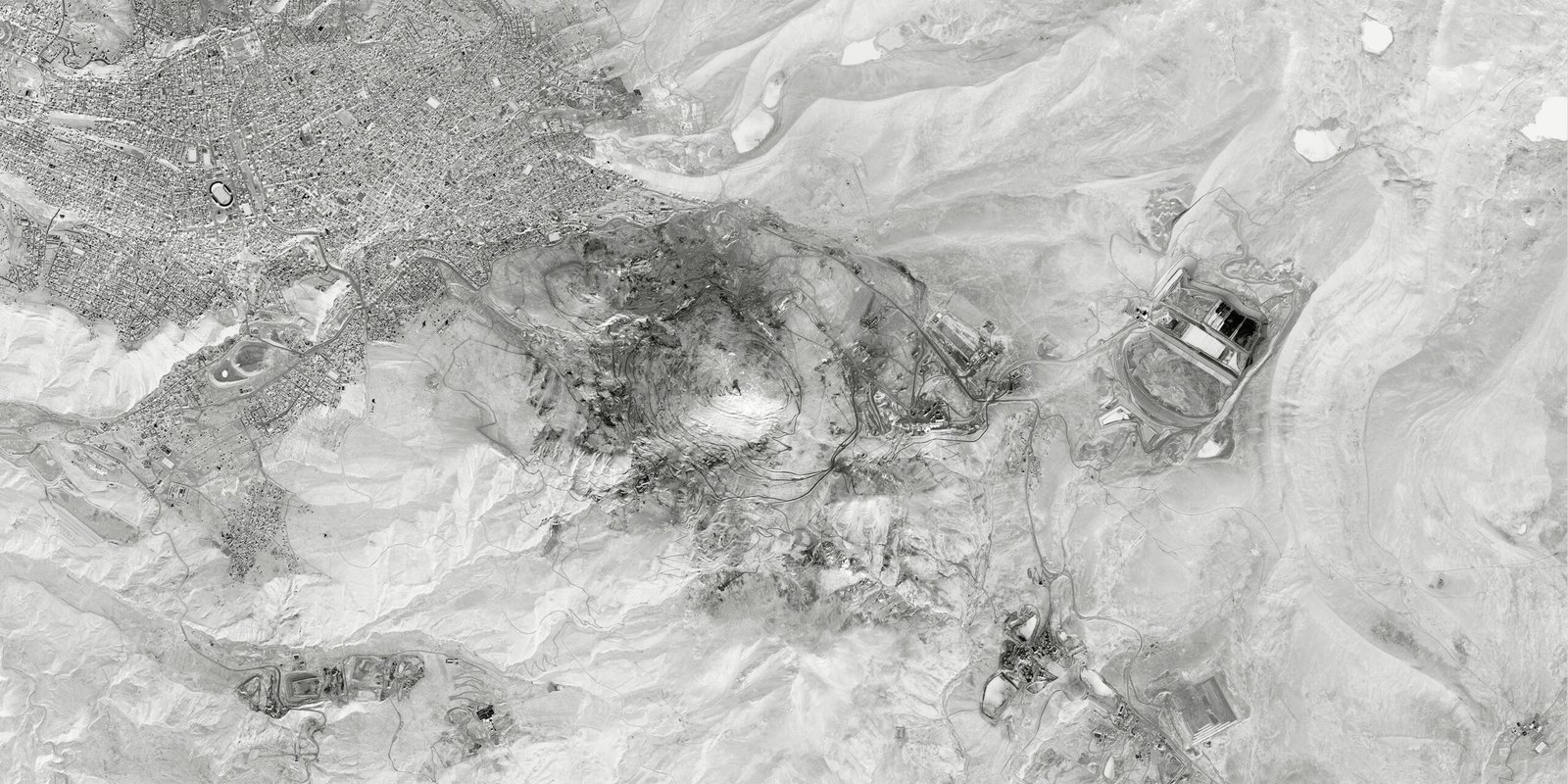
Bolivia | Potosí | Tomás Frías | Cerro Rico (Sumaj Orko) | 19°37’8″S 65°44’59″W | 21 Mar 2015 | 2018
Inkjet sobre Canson Baryta 310 g, 300 × 150 cm
PLATA
SP
El Cerro Rico de Potosí, descubierto en 1545 en la actual Bolivia, fue el yacimiento de plata más grande del mundo y el motor económico que financió al Imperio español y al capitalismo europeo.
Su explotación colonial bajo el sistema forzado de la mita provocó una altísima mortalidad de trabajadores indígenas. En la actualidad, tras casi quinientos años de actividad ininterrumpida, el cerro sigue siendo explotado de forma rudimentaria por cooperativas mineras, pero sufre un grave deterioro estructural con decenas de hundimientos internos que generan un riesgo inminente de colapso geológico.
FICHA TÉCNICA
Cartografías satelitales de campos de extracción, construidas a partir de capturas de pantalla de Google Earth. Impresión inkjet sobre papel Baryta o Platine. Medidas variables. Edición de 5 + 1 P/A.
EN
Cerro Rico de Potosí, discovered in 1545 in present-day Bolivia, was the largest silver deposit in the world and the economic engine that financed the Spanish Empire and European capitalism. Its colonial exploitation under the forced labor system of the mita caused extremely high mortality among Indigenous workers. Today, after nearly five hundred years of uninterrupted activity, the mountain is still mined by rudimentary means by mining cooperatives, but it suffers severe structural deterioration, with dozens of internal sinkholes creating an imminent risk of geological collapse.
TECHNICAL DETAILS
Satellite cartographies of extraction sites, built from Google Earth screenshots. Inkjet print on Baryta or Platine paper. Variable dimensions. Edition of 5 + 1 AP.